
Water Filter
Water Filters to Reduce Lead in Drinking Water
 Lead continued to be used in domestic plumbing in the UK until it was banned from new installations in 1969. As a result, any property built or substantially altered before 1970 may still contain lead pipes unless they have already been replaced.
Where flushing is not practical, or while waiting for lead pipe replacement works to be carried out, point-of-use water filters can be used as a short-term mitigation measure. These filters are designed to reduce both dissolved lead (lead in solution) and particulate lead (small metal fragments) from drinking water.
Water Filters for Drinking Water
If tap water is your primary source of drinking water, a kitchen water filter may help reduce exposure to certain contaminants. Depending on the type, water filters can lower levels of substances such as chlorine, lead, and some pesticides. In addition to potential safety benefits, some users also notice improvements in taste and clarity.
However, performance varies significantly between products, and not all water filters are suitable for lead reduction.
Can Water Filters Remove Lead?
Water filters are not a reliable long-term solution for lead contamination caused by lead pipes. Even certified filters typically reduce lead rather than eliminate it completely. Because there is no safe level of lead exposure, any remaining traces can still pose a risk—particularly to infants, young children, and pregnant women.
The only guaranteed way to remove lead from your drinking water supply is to replace the lead pipes entirely.
What to Look for in a Water Filter for Lead
If a filter is being used temporarily, it should meet the following criteria:
Independent Certification
In the UK, products should be tested and approved by recognised bodies such as the Water Regulations Advisory Scheme (WRAS) or equivalent third-party certifiers.
Multi-Stage Filtration
The filter should clearly state that it reduces both dissolved and particulate lead, not just one form.
Cold-Water Use Only
Water filters must only be used with cold water. Hot water dissolves lead more readily and can also damage filter components.
Common Types of Water Filters Used for Lead Reduction
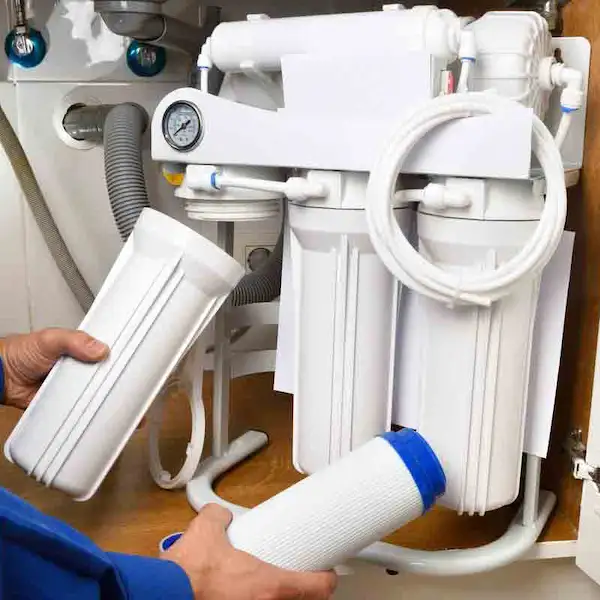
Under-Sink Water Filters
Installed beneath the kitchen sink and connected directly to the cold-water supply. These typically offer higher flow rates and longer cartridge life.
Tap-Mounted Water Filters
Fitted directly onto the end of a tap. These are easy to install but may have lower capacity and require frequent cartridge changes.
Jug Water Filters
Portable and convenient, but not all jug filters are certified for lead reduction. Performance varies widely, so product specifications must be checked carefully.
Maintenance and Correct Use
To remain effective, water filters must be installed correctly and maintained in accordance with the manufacturer's instructions. Filter cartridges must be replaced at the recommended intervals—failure to do so can reduce effectiveness or allow contaminants to pass through.
Important Note
Water filters do not remove lead pipes and should not be relied upon as a permanent solution. They are a temporary measure only, intended to reduce exposure while full lead pipe replacement is planned and completed.
For long-term safety, replacing all lead pipework—both underground and within the property—remains the only effective and permanent solution.